Adi Vaani, the government-backed artificial-intelligence platform for tribal languages, has assembled 13.9 lakh text sentences across 10 languages and about 300 hours of speech, creating digital infrastructure for languages that are poorly served by mainstream technology.
The platform offered text translation in nine tribal languages as of 15 October 2026 and works with 13 languages across different stages of corpus development. Its tools include text and speech translation, optical character recognition, video subtitling, more than 300 primers and 24 dictionaries.
Community data is the core innovation
Language AI depends on large, reliable examples of speech and text. For low-resource languages, the main constraint is often not computing power but the absence of validated datasets, standard spellings and enough native-speaker participation.
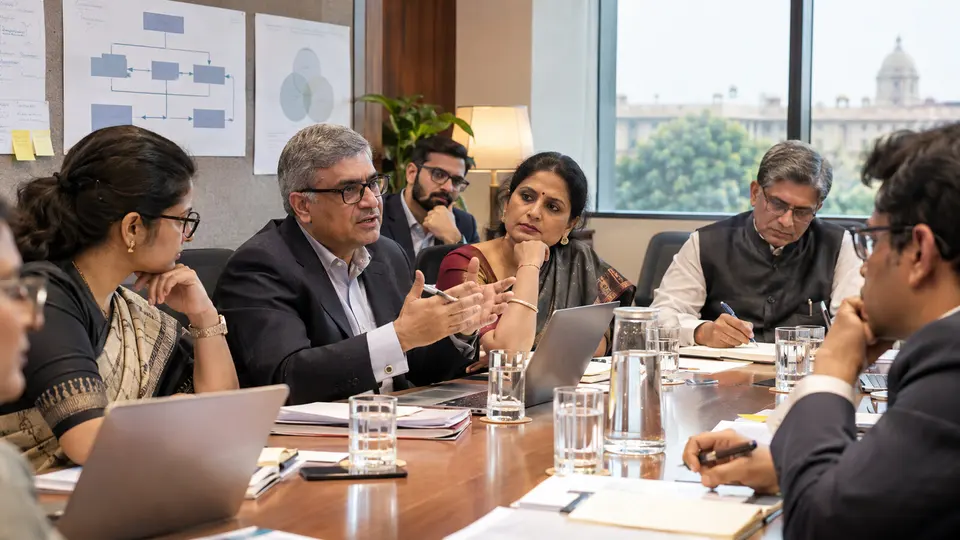
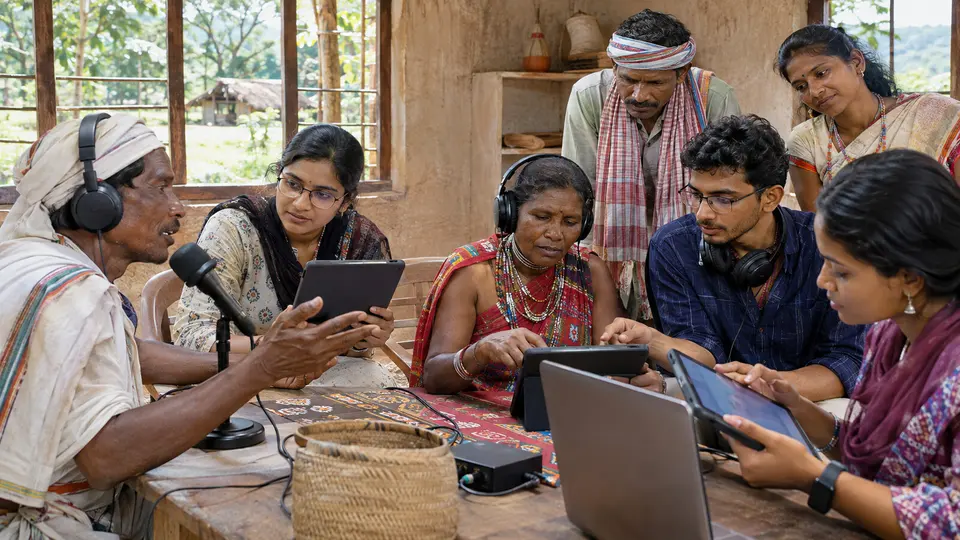
Adi Vaani is being developed by a consortium led by IIT Delhi with BITS Pilani, IIIT Hyderabad, IIIT Nava Raipur and tribal research institutes. Native speakers contribute and validate material, which can reduce errors that arise when language systems are trained without cultural or linguistic context.
The Ministry of Tribal Affairs says the Android application has crossed 35,000 downloads and has about 6,500 monthly users. Those figures show early demand, but sustained use and translation quality will be more important measures than installs alone.
A platform can support services and new businesses
Reliable tribal-language tools could improve access to health, education, welfare information and public services. They could also lower localisation costs for media, commerce and digital-service providers seeking to reach underserved communities.
The initiative is considering a National Tribal Language Repository, which could make language assets easier to preserve and reuse. Governance will be critical: contributors should understand how recordings are used, communities should retain a meaningful role in validation, and access rules should protect sensitive cultural material.
The commercial opportunity is real but still early. Open, interoperable language resources can stimulate applications built by start-ups and researchers, while overly closed systems could limit experimentation. Transparent quality benchmarks, consent practices and licensing terms will determine whether the dataset becomes durable public digital infrastructure.
Sources: Ministry of Tribal Affairs via PIB, 15 November 2026 and PIB background note on Adi Vaani.
This article is journalism and commentary. It is not a recommendation to buy or sell any security, and it is not professional advice. Read the full disclaimer.