The Supreme Court has held that a company's profitability is no bar to insolvency proceedings once a default is shown. The ruling, in Deepak Raheja v. Omkara Assets Reconstruction Pvt. Ltd., was given on 15 October 2026 by Justices Dipankar Datta and Augustine George Masih, and reported by LiveLawBiz. It dismissed appeals against insolvency admission of GSTAAD Hotels and Neo Capricorn Plaza.
The loans
Piramal Finance lent ₹600 crore to the two companies as co-borrowers under a December 2017 agreement. The loans were assigned to Omkara in December 2022, and Omkara sent recall notices and went to the NCLT in March 2023. The NCLT admitted the petitions in 2024 and the NCLAT upheld them on 19 August 2025.
What the Court held
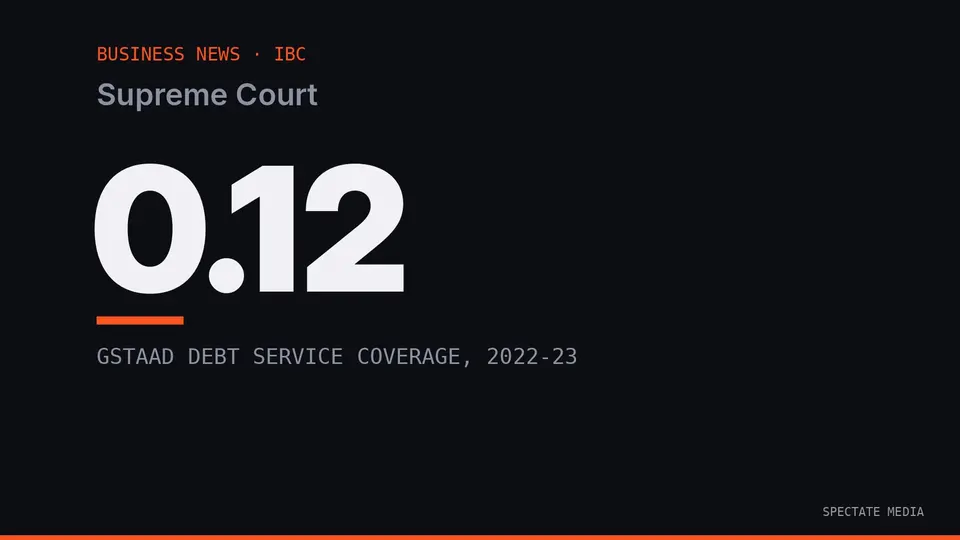
The Code uses default under Section 3(12) as the trigger, not balance-sheet insolvency. The Court said profitability is "neither legally relevant to, nor economically probative of, the capacity to service debt." It found a default of ₹17.16 crore at GSTAAD and at least ₹2.64 crore at Neo Capricorn, both above the statutory threshold. GSTAAD's debt service coverage ratio was 0.12 in 2022–23, meaning internal accruals covered 12% of its debt obligations, which the Court used to reject an argument based on positive operating profit.
How default is proved
An authenticated default record from an information utility is the highest-tier evidence and can be displaced only by clear, cogent, credible and compelling material. Loan agreements, account statements and acknowledgements can together show default but carry less weight. A debtor that leaves an information utility record unchallenged may be barred from denying the default later.
A side issue
A second summary, from The Law Communicants, reports that the Court criticised a compilation of judgments filed by the appellants that was said to contain non-existent AI-generated cases. It called this an undesirable incident and considered exemplary costs but imposed none, as the first appellant had died.
Key numbers
- Loan facilities: ₹600 crore (From Piramal Finance, December 2017)
- Default at GSTAAD Hotels: ₹17.16 crore (Above the threshold)
- Default at Neo Capricorn Plaza: At least ₹2.64 crore (Above the threshold)
- GSTAAD debt service coverage: 0.12 (In 2022–23)
What boards and CFOs should note
Three points stand out. First, a company with profits can still face insolvency if it defaults. Second, an information utility record is hard to rebut, so borrowers should challenge it when it is first authenticated. Third, filings should be checked, since fabricated citations drew the Court's criticism.
Source: LiveLawBiz, 15 October 2026. This is a summary of a news report, published as general information. It is not legal, tax or investment advice.
This article is journalism and commentary. It is not a recommendation to buy or sell any security, and it is not professional advice. Read the full disclaimer.