India is examining a regulatory sandbox, single-window clearances and shared laboratory infrastructure as part of an effort to help biopharma startups move scientific work into commercial products faster.
The priorities emerged from a roundtable chaired by Commerce and Industry Minister Piyush Goyal and organised by the Department for Promotion of Industry and Internal Trade with NITI Aayog and the NITI Frontier Tech Hub. Participants included policymakers, established life-science companies and startups.
The commercialisation gap
Biopharma companies face a longer and more capital-intensive path than many software startups. They need specialised laboratories, validated testing, regulatory approvals, intellectual-property protection and, in some cases, clinical-trial capacity before revenue can scale.
The discussion therefore focused on faster approvals, global regulatory alignment and simplified patent applications. A proposed sandbox could allow new products or processes to be evaluated in a supervised environment before the full compliance pathway is settled.
Shared infrastructure could lower entry costs
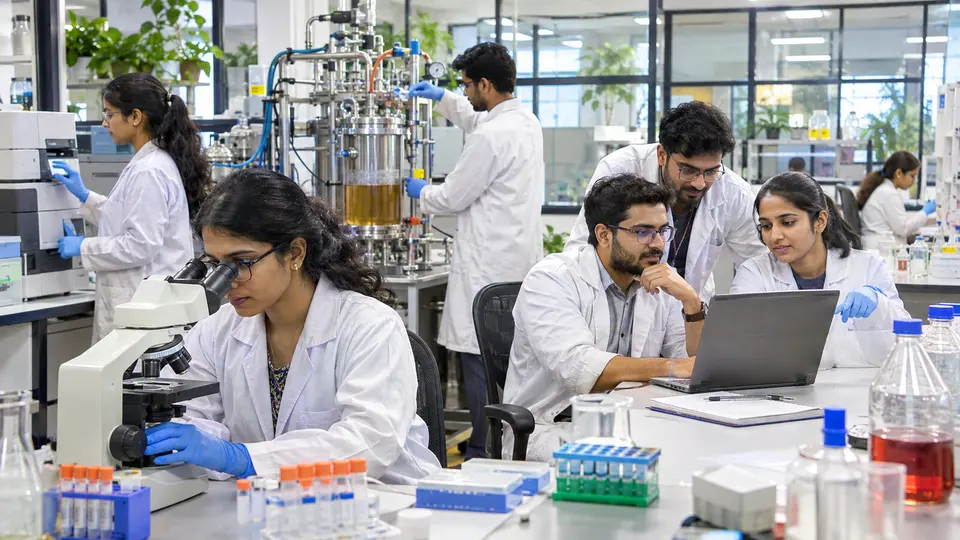
Participants called for common laboratories, testing facilities and clinical-trial infrastructure. Shared assets can reduce the upfront capital required by young companies and improve access to equipment that would otherwise remain underused if every startup built its own facility.
The model still requires clear rules on scheduling, data confidentiality, quality systems and responsibility when tests fail. Investors will want evidence that shared facilities meet standards recognised by domestic and overseas regulators.
Biopharma SHAKTI in the background
The roundtable also considered Biopharma SHAKTI, announced in the 2026-27 Union Budget. The wider policy objective is to strengthen indigenous life-science manufacturing while improving the link between research, industry and government.
Customs clearance for laboratory equipment and reagents was another concern. Delays can interrupt experiments, shorten the usable life of temperature-sensitive inputs and make development timelines less predictable.
What founders and investors should track
- Whether a regulatory sandbox receives a formal design and launch date
- Which approvals are included in any single-window system
- Access terms and accreditation for shared laboratories
- Patent-processing timelines and specialist examination capacity
- Customs procedures for scientific equipment and reagents
- Availability of growth capital beyond early research grants
For founders, the useful outcome would be a shorter, more predictable route from discovery to validated product. Speed alone is not enough: shortcuts that weaken quality or clinical evidence would make international approvals harder.
Investors should distinguish a policy discussion from an implemented programme. The roundtable set priorities, but the commercial effect will depend on notified rules, funded infrastructure and measurable changes in approval timelines.
Shared infrastructure could also improve geographic access if facilities are distributed beyond the largest research clusters. However, a national network will need interoperable quality systems so that data produced at one centre is accepted by regulators, partners and investors elsewhere.
Established pharmaceutical companies have a role as customers, manufacturing partners and sources of specialist expertise. Well-designed collaboration can give startups a route to scale while helping larger companies access external innovation, but ownership of intellectual property and future commercial rights must be agreed early.
India has scientific talent and a large healthcare market, but biopharma scale requires repeatable translation of research into manufacturing. The next checkpoint is whether the proposals become operating mechanisms with accountable deadlines.
Source: Ministry of Commerce and Industry release published by the Press Information Bureau on 3 November 2026.
This article is journalism and commentary. It is not a recommendation to buy or sell any security, and it is not professional advice. Read the full disclaimer.