
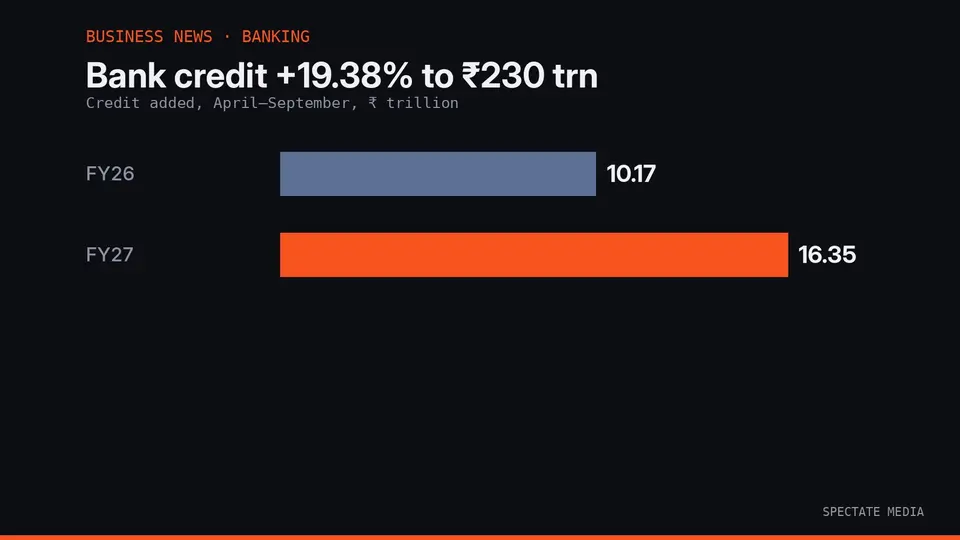
Bank credit in India grew 19.38% from a year earlier to ₹230 trillion in the fortnight ended 30 September 2026, and deposits reached ₹283.95 trillion, according to an Angel One News report of 16 October, updated on 17 October. The report attributes the figures to RBI data as given in a news report.
The half-year
Credit rose by more than 3% in the fortnight and deposits by 2.8%. Over April–September, banks added ₹16.35 trillion of credit, against ₹10.17 trillion a year earlier, an increase of about 61%. Deposits added were ₹21.67 trillion against ₹15.18 trillion, about 43% more. On the reported totals, credit stands at about 81% of deposits.
Rates
The RBI raised the repo rate by 25 basis points to 5.50% on 7 October. CareEdge expects the increase to pass into lending rates, external-benchmark loans first and loans linked to the marginal cost of funds later.
Outlook
The report says credit growth stayed strong in the first half, but higher funding costs and tighter liquidity could slow lending in the second half. It gives no sector-wise split, does not name the start date of the fortnight, and does not cite the primary RBI release.
Key numbers
- Bank credit: ₹230 trn (+19.38% YoY)
- Deposits: ₹283.95 trn (At 30 September)
- Credit added, Apr–Sep: ₹16.35 trn (vs ₹10.17 trn a year ago)
- Deposits added, Apr–Sep: ₹21.67 trn (vs ₹15.18 trn a year ago)
What boards and CFOs should note
Three points stand out. First, loans grew faster than in the same half last year, but deposits added were larger still (₹21.67 trillion against ₹16.35 trillion), which has kept the credit-to-deposit ratio near 81%. Second, the repo hike arrived after the half-year closed, so its effect on borrowing will show in the next data. Third, borrowers should plan for the second-half slowdown the report mentions rather than assume the first-half pace.
Source: Angel One News, 17 October 2026. This is a summary of a news report, published as general information. It is not legal, tax or investment advice.
This article is journalism and commentary. It is not a recommendation to buy or sell any security, and it is not professional advice. Read the full disclaimer.