NITI Aayog and GIZ India have signed an implementation agreement for the second phase of the Nationally Determined Contribution–Transport Initiative for Asia, creating a new policy and industry platform for decarbonising India’s road-freight sector.
The agreement was signed on 3 November and announced the following day. The programme is supported by the German government’s International Climate Initiative, with World Resources Institute India, the International Council on Clean Transportation India and Agora Energiewende among the implementing partners.
Heavy trucks remain the difficult segment
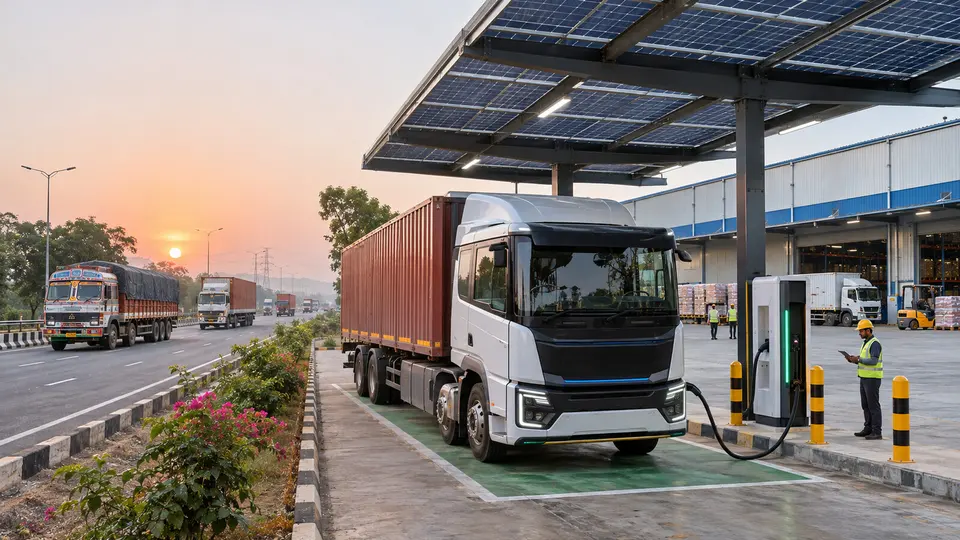
India’s electric-mobility transition has advanced more quickly in two-wheelers, three-wheelers, buses and light commercial vehicles than in medium- and heavy-duty trucks. Long routes, high energy demand, payload sensitivity and the cost of downtime make freight electrification a different operating problem.
NITI Aayog identified three areas requiring coordinated action: adequate charging infrastructure, innovative financing and an enabling regulatory framework. Those elements are interdependent. Fleet operators are unlikely to buy electric trucks without dependable high-capacity charging, while charging investors need confidence that enough vehicles will use their assets.
Financing is equally important because a higher upfront vehicle cost can be difficult for smaller fleet owners even where lifetime fuel and maintenance savings are plausible. Lenders and lessors need reliable data on battery life, resale values, utilisation and route-level economics before scaling products.
The sector needs corridor-level execution
The agreement formalises collaboration but does not announce a vehicle target, funding amount or charging-station count. Its commercial value will therefore depend on the projects and regulatory proposals that follow.
For logistics companies, corridor pilots can establish where charging should be located, how it interacts with mandatory driver rest and loading schedules, and whether payload or range constraints affect service levels. Shippers will also need credible methods for calculating and reporting freight emissions.
The programme is intended to contribute to India’s nationally determined contribution and long-term climate goals. Road freight is a material part of that challenge because trucks combine high utilisation with long asset lives; vehicles purchased now can remain in service for years.
The next useful milestones are named freight corridors, committed charging capacity, financing partners and measurable operating data from electric medium- and heavy-duty fleets. Without those, the initiative remains a cooperation framework rather than an investable transition pathway.
Sources: NITI Aayog via PIB, 4 November 2026; NITI Aayog.
This article is journalism and commentary. It is not a recommendation to buy or sell any security, and it is not professional advice. Read the full disclaimer.