Indian companies had signed green-hydrogen and derivative offtake commitments totalling 5,55,610 metric tonnes per annum by October 2026, according to the Ministry of New and Renewable Energy. The ministry said fulfilling the contracts would require aggregate investment of about ₹90,000 crore.
The total represents roughly 11% of the National Green Hydrogen Mission's target of at least 5 million tonnes of annual production by 2030. More than 70% of the contracted volume is earmarked for exports, making overseas demand a major part of the emerging project pipeline.
Eighteen agreements were added in 2026
Indian companies signed 18 new offtake agreements covering more than 4 lakh tonnes a year during 2026. Since the mission began in 2023, 23 contracts covering about 5.5 lakh tonnes of green-hydrogen-equivalent supply have been signed.
The agreements span green ammonia, green methanol and hydrogen. Named counterparties include buyers in Japan, Germany, South Korea and Sri Lanka, while domestic demand is being built through fertiliser and refinery procurement programmes.
An offtake agreement can improve revenue visibility and project-financing prospects, but it does not by itself prove that a plant is commissioned or that supply has begun. Delivery schedules, certification, renewable-power availability, logistics and final financing remain critical execution tests.
Export demand dominates the committed volume
The ministry cited large supply arrangements involving ACME Group, L&T, Reliance Industries, AM Green and other developers. It said Indian suppliers were offering competitive prices for green ammonia and methanol in European and Japanese markets.
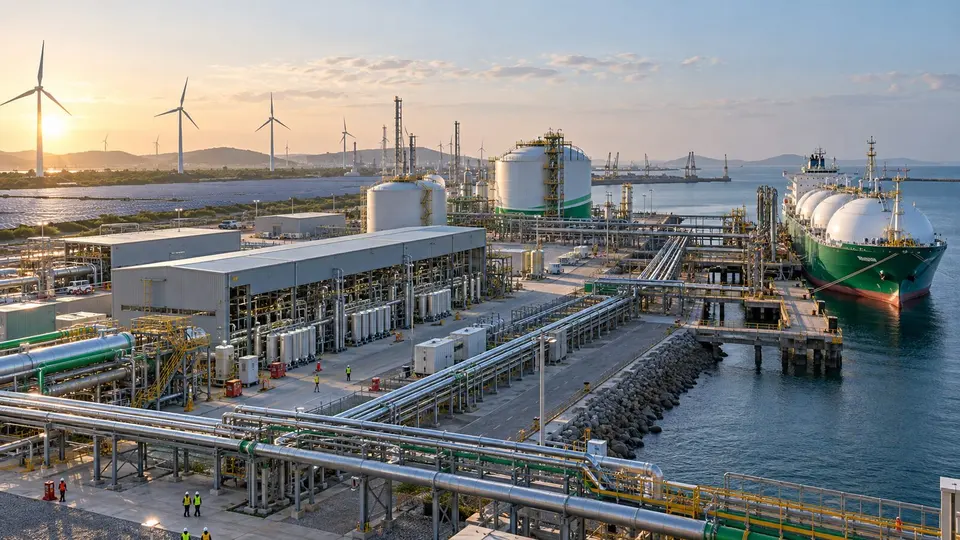
Green ammonia is being positioned for fertiliser production, power-plant co-firing and maritime fuel, while green methanol is attracting shipping-sector demand. These derivative products can be easier to transport than hydrogen itself, but their economics still depend on renewable electricity, electrolyser utilisation and export infrastructure.
Domestic programmes add a second demand channel
Under the SIGHT programme, production and supply arrangements cover 6,70,000 tonnes a year of green ammonia for 11 fertiliser units. Projects have also been awarded for 30,000 tonnes a year of green hydrogen for refineries operated by IOCL, BPCL, HPCL and NRL.
Those programme awards are distinct from the 5,55,610-tonne firm and signed offtake figure in the release. Investors should therefore avoid adding every announced quantity together without checking scope, status and possible overlap.
Key numbers
- Signed commitments: 5,55,610 tonnes a year
- New agreements signed in 2026: 18
- Share earmarked for exports: more than 70%
- Estimated investment needed: about ₹90,000 crore
- National 2030 production target: at least 5 million tonnes a year
What boards and CFOs should note
- Which contracts are binding, and what conditions precede financial close or delivery?
- How sensitive are project returns to renewable-power prices, electrolyser utilisation and export logistics?
- Which certification and traceability standards will buyers require in Europe and Asia?
Source: Ministry of New and Renewable Energy via PIB, 29 October 2026. This is a summary of an official release, published as general information. It is not legal, tax or investment advice.
This article is journalism and commentary. It is not a recommendation to buy or sell any security, and it is not professional advice. Read the full disclaimer.