
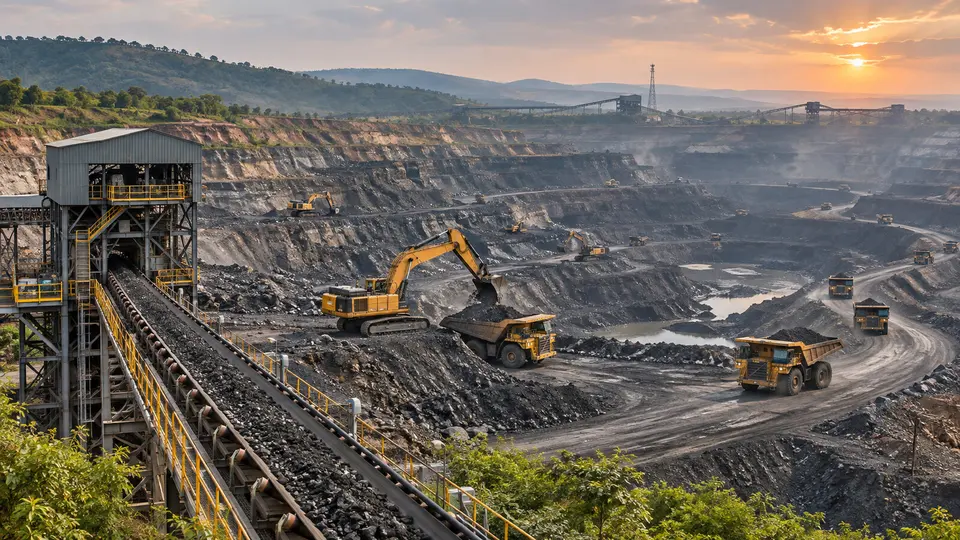
Coal production from India’s captive and commercial mines rose about 42% year on year to 22.03 million tonnes in October 2026, according to Ministry of Coal data released on 2 November.
Dispatches increased about 36% to 21.11 million tonnes. In October 2025, the same mine category produced 15.49 million tonnes and dispatched 15.48 million tonnes.
Seven-month volumes remain ahead
From April through October, captive and commercial mines produced 117.23 million tonnes, up 11.30% from 105.33 million tonnes in the comparable period of 2025–26. Dispatches rose 11.53% to 124.86 million tonnes from 111.95 million tonnes.
The gap between cumulative dispatch and production can reflect movement of previously accumulated stocks as well as the timing of mine output and customer lifting. Monthly data should therefore be read with mine-level inventories and demand conditions rather than as a direct measure of final consumption.
October’s acceleration is nevertheless significant because captive and auctioned commercial mines are intended to diversify supply beyond the traditional public-sector producers. Higher output can support power, metals, cement and other industrial users, provided logistics capacity keeps pace and coal quality remains consistent.
Operational mine count reaches 87
The Lohari coal mine in Jharkhand received mine-opening permission during October, taking the number of operational captive and commercial mines to 87. The ministry said the mine had awaited operationalisation for several years.
Bringing delayed blocks into production is central to the commercial-mining policy. The data suggest progress, but aggregate growth can conceal wide differences across individual mines. Investors and industrial buyers will need to track which blocks are scaling consistently, how quickly new approvals translate into dispatches and whether rail evacuation constrains output.
The government expects stronger domestic supply to reduce coal imports and conserve foreign exchange. That outcome will depend on the grades displaced: higher volumes do not automatically replace imported coking coal or specialised thermal grades.
For the remainder of 2026–27, the useful indicators are sustained double-digit dispatch growth, the commissioning pace of additional blocks and the relationship between mine production, inventories and sector-specific demand.
This article is journalism and commentary. It is not a recommendation to buy or sell any security, and it is not professional advice. Read the full disclaimer.