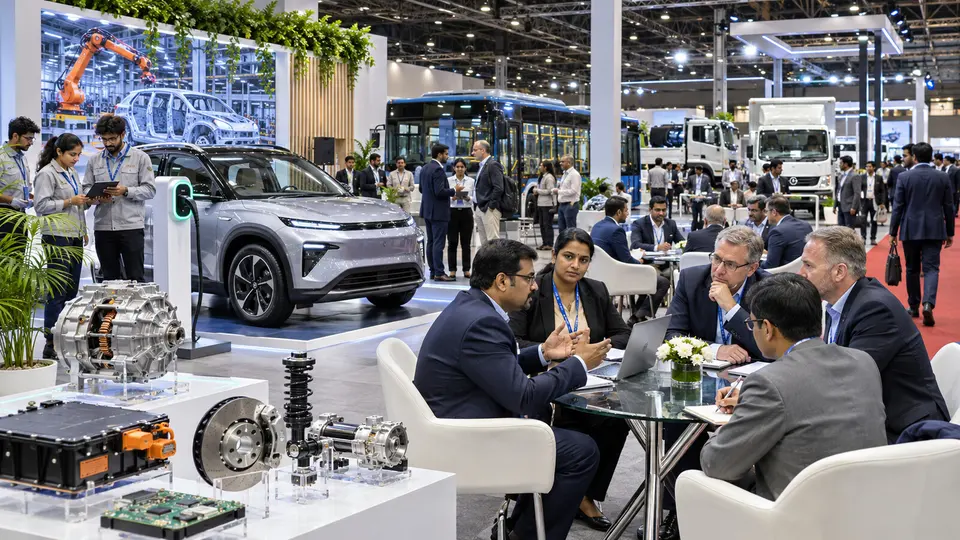
India is positioning the third Bharat Mobility Global Expo as an export and manufacturing platform rather than only a domestic vehicle showcase, with the government describing the coming edition as the world’s second-largest mobility exhibition.
Commerce and Industry Minister Piyush Goyal, speaking at the event’s curtain raiser on 10 November, urged companies across the mobility value chain to pursue global markets, partnerships and export-led growth.
The value chain extends beyond finished vehicles
The mobility sector brings together passenger and commercial vehicles, auto components, batteries, charging systems, electronics, software, logistics and manufacturing equipment. A large common exhibition can allow suppliers to meet vehicle makers and overseas buyers without relying on separate segment-specific events.
The government linked the expo to India’s wider manufacturing ambition and said engineering exports had recorded 22% growth. It also said India was on track to reach a $1 trillion export target this year, although companies should assess the detailed trade data and product mix rather than treat a ministerial projection as a completed outcome.
For manufacturers, the commercial test is whether exhibitor meetings turn into orders, joint development, sourcing agreements or investment. Attendance and floor area establish scale, but they do not measure business conversion.
Global reach raises the quality threshold
Export expansion requires more than cost competitiveness. Vehicle and component suppliers need certification, reliable delivery, traceable quality systems and the ability to support products after sale. Electric and software-defined mobility also increases the importance of cybersecurity, battery safety and interoperability.
The expo can help smaller suppliers demonstrate capabilities to customers that would otherwise be expensive to reach. Their ability to participate meaningfully will depend on buyer access, technical documentation and follow-up after the event.
The government’s emphasis on international partnerships also reflects the global structure of mobility supply chains. Companies may compete for exports while importing specialised materials, machinery or intellectual property. Local value addition and resilience therefore need to be assessed component by component.
The indicators to watch are the number of overseas buyers, announced sourcing agreements, export orders and manufacturing investments linked to the event. A larger expo matters commercially only if it lowers the cost of customer discovery and helps Indian companies move into higher-value products.
Source: Ministry of Commerce and Industry via PIB, 10 November 2026.
This article is journalism and commentary. It is not a recommendation to buy or sell any security, and it is not professional advice. Read the full disclaimer.