
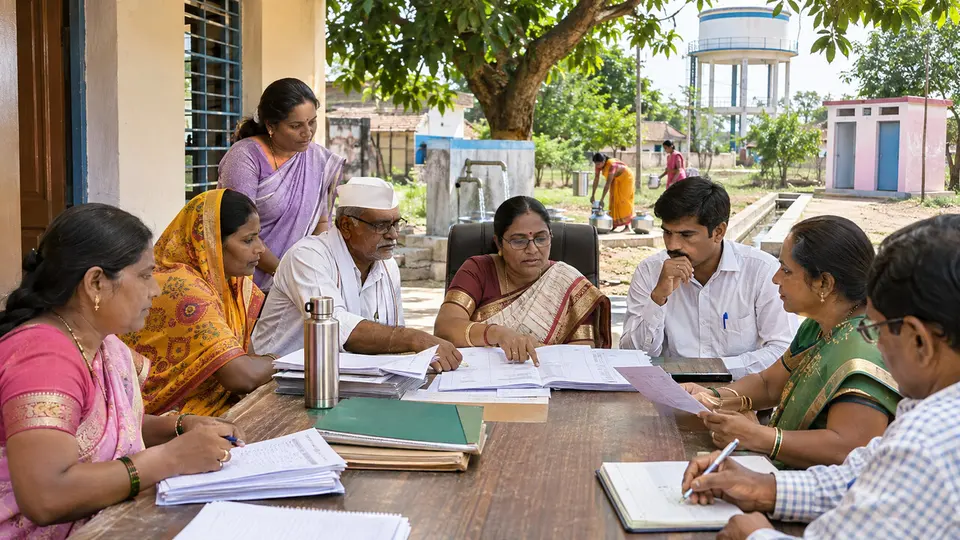
Intergovernmental transfers account for about 90% of Gram Panchayat receipts, according to a new RBI study covering a balanced panel of 225,000 village councils.
Own-source revenue contributes only about 10%, led mainly by non-tax income such as interest, programme funds and user charges.
Local finances improved but autonomy remains limited
The RBI found that Gram Panchayat finances strengthened during 2022-23 and 2023-24. Heavy dependence on transfers nevertheless restricts the ability of local bodies to set spending priorities independently and respond to local needs.
The report covers 2022-23 through 2024-25 and focuses on local finances and capacity building in rural India.
Water supply and sanitation represented the largest expenditure category at about 40% of total spending. This reflects Finance Commission mandates and convergence with national schemes, while also showing how strongly village budgets are shaped by earmarked transfers.
Own revenue is a capacity question
Improving local fiscal capacity requires more than adding taxes. Panchayats need reliable property and service records, transparent billing, trained staff, digital accounting and mechanisms that connect user charges with service delivery.
Transfers remain essential because revenue capacity varies widely across rural India. The policy challenge is to preserve equalisation and national priorities while giving capable local bodies stronger incentives to raise and manage their own resources.
Standardised, timely financial reporting is also important. Better data allow states, residents and lenders to compare outcomes and assess whether higher spending translates into improved rural infrastructure and services.
This article is journalism and commentary. It is not a recommendation to buy or sell any security, and it is not professional advice. Read the full disclaimer.